
A seamless, custom mineral finish for floors, walls, showers, and bathrooms — with no grout lines to clean.
Cozy Coatings is adding microcement as a premium finish for Orange County homes. It is a thin, hand-applied cement coating that can run across floors, up walls, and into showers as one continuous surface. We are based in Huntington Beach, and we are training specifically in this system so we can install it the right way — especially in wet areas, where the prep and waterproofing matter as much as the finish you see.
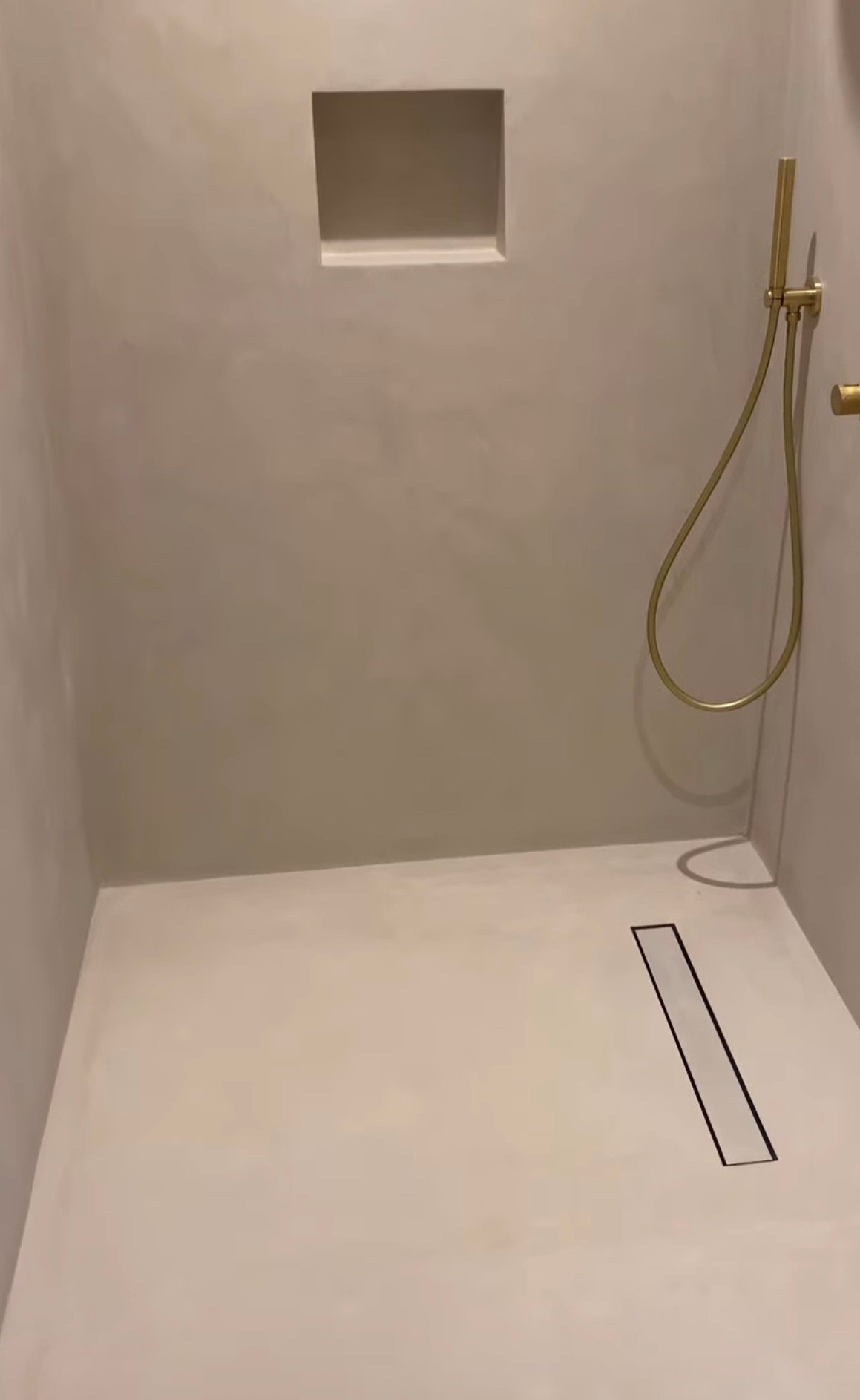
Microcement is a thin, trowel-applied cement coating, usually only a few millimeters thick. It is built as a system, not a single coat of paint or a pour of concrete. A typical installation includes surface preparation, a primer, reinforcement where it is needed, two base coats, two finish coats for color and texture, and a protective sealer.
Because it is so thin, it can often go over a sound existing surface — including stable tile — without a full tear-out, and without changing door heights. The look is mineral and seamless: no grout lines, with subtle movement in the color from the trowel work.
It is not the same thing as polished concrete, and it is not epoxy. Polished concrete is the slab itself, ground and polished in place. Epoxy is a resin coating, which is what we use on many garage floors. Microcement is a cement-based finish designed for interiors — including walls and showers — when it is specified and sealed as a complete system.
Microcement can be applied on floors, walls, and many built-in surfaces in a home. The most common requests are bathrooms and showers, where a grout-free surface is the main draw, and living areas where a floor can run from one room into the next.
We will tell you if a surface is not a good candidate. Movement in the substrate, active cracks, or moisture problems need to be addressed before any finish goes on.
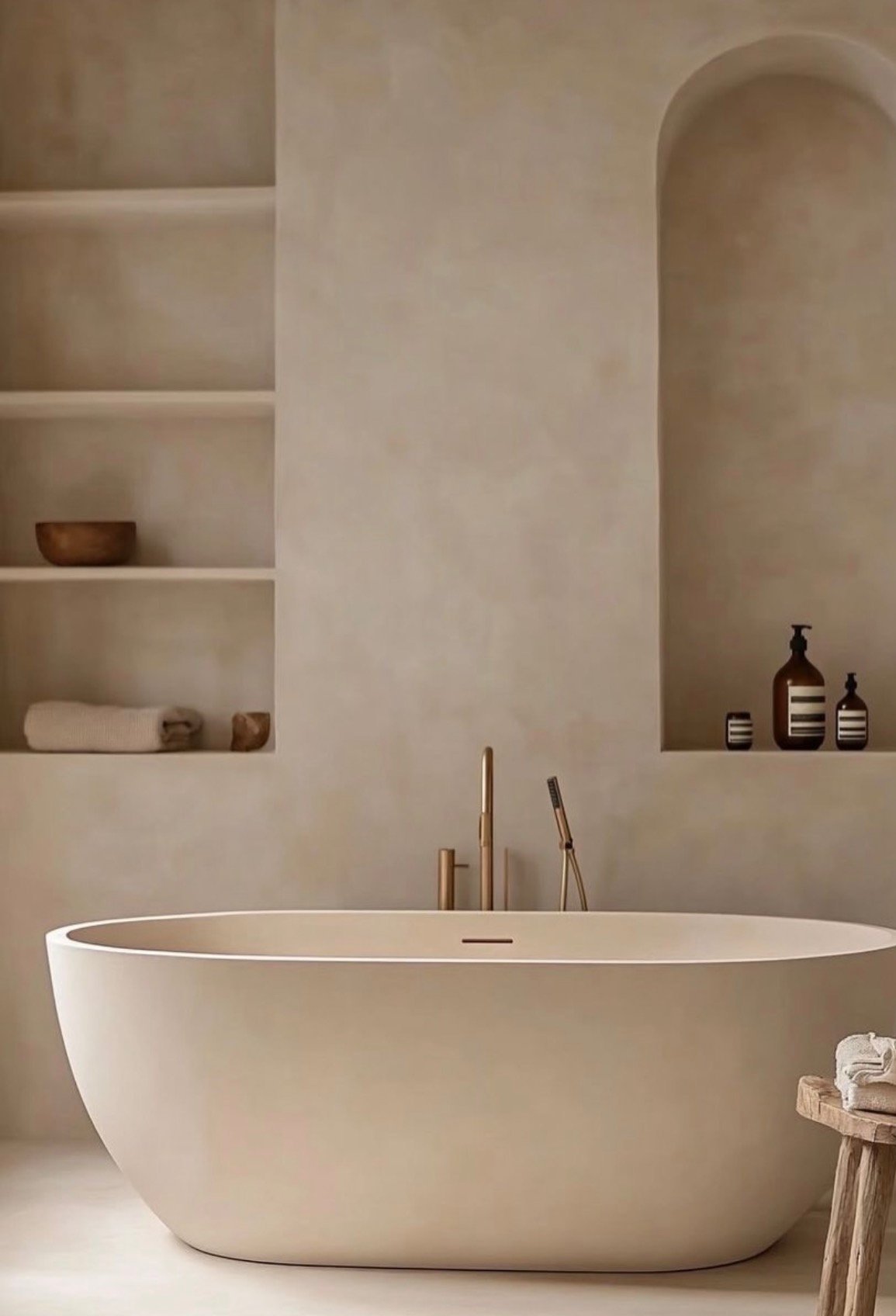
Walls, floors, shower surrounds, and tub niches can share one continuous finish. In a wet area, microcement is the visible finish, not the waterproofing. We build it over a proper waterproofing membrane, with the right reinforcement and sealer for showers.
Living rooms, kitchens, hallways, and bathrooms can have a seamless floor with almost no added height.
Feature walls, bathroom walls, and surfaces that wrap from floor to wall without a transition strip.
Treads, risers, and landings can be finished in the same material as the adjoining floor or wall.
Vanities, fireplace surrounds, and some furniture or countertop pieces can be coated when the substrate is suitable. Heat, staining, and daily wear are reviewed before we recommend microcement for a countertop or hearth.
These photos show the look of microcement in bathrooms and living spaces. They are design references, not Cozy Coatings projects.
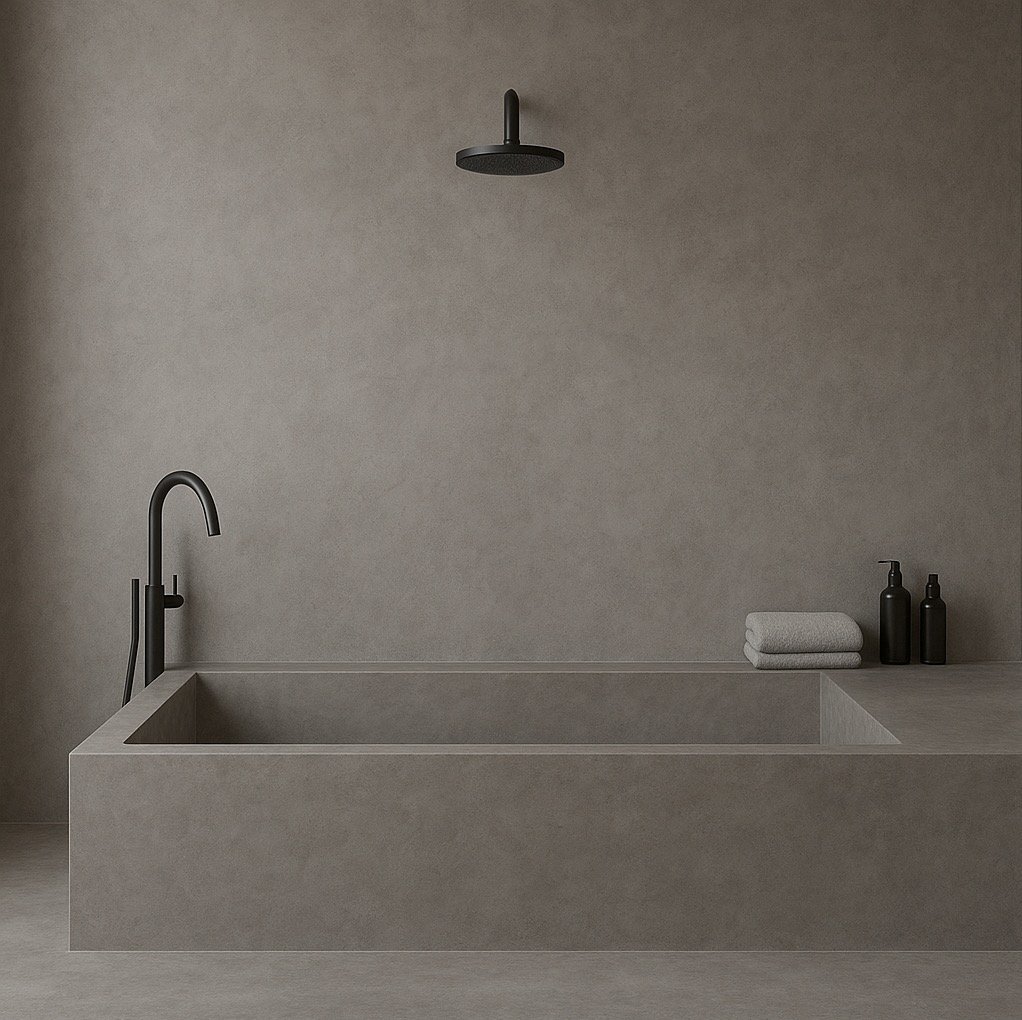
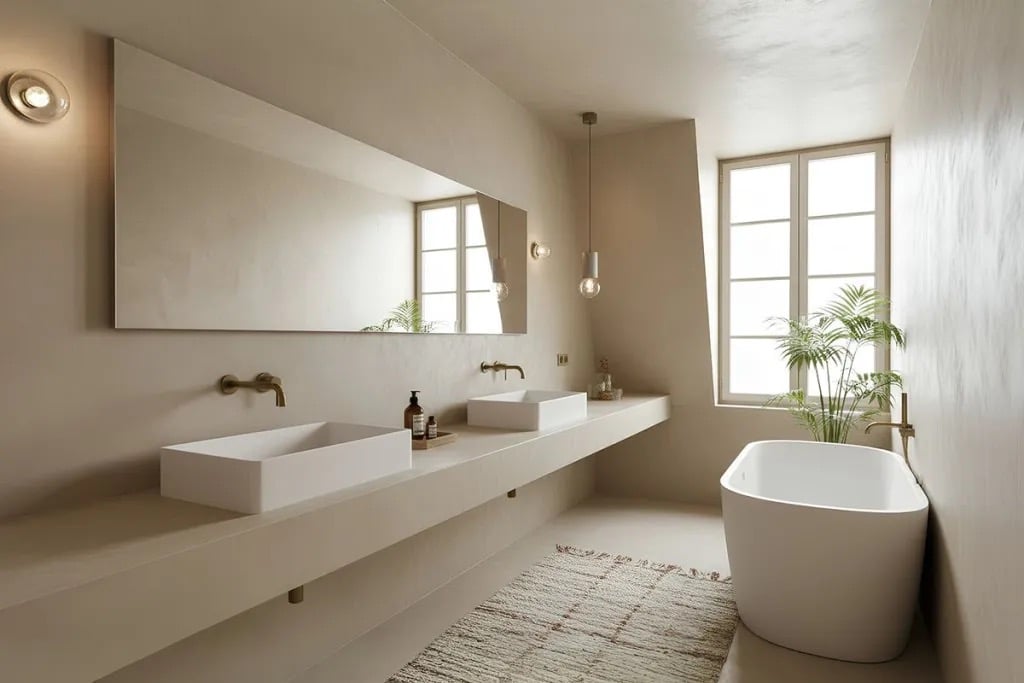

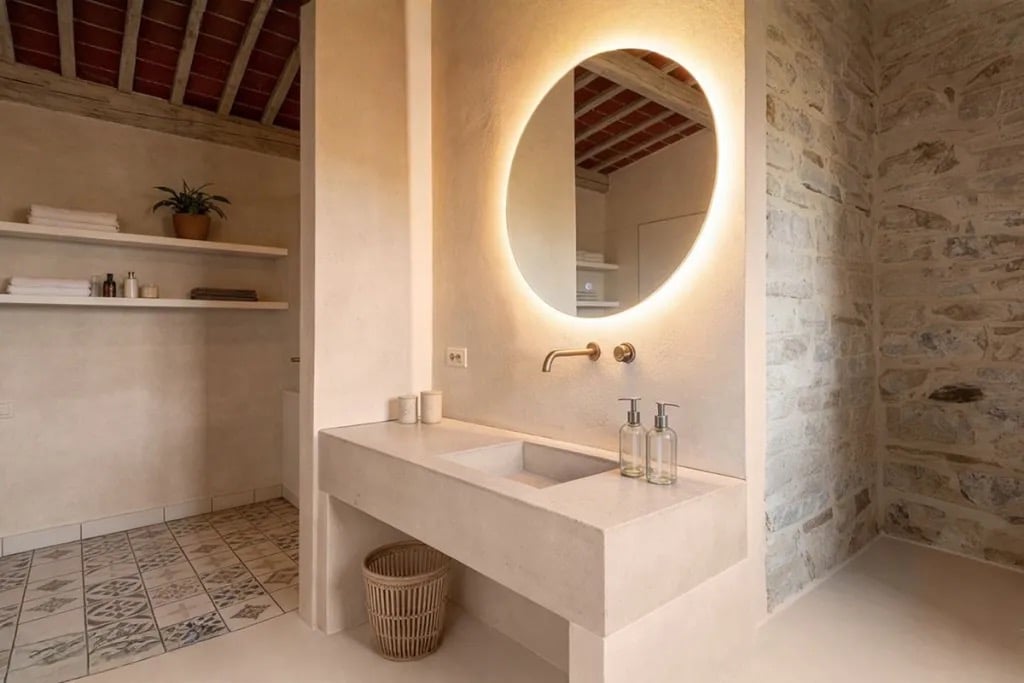
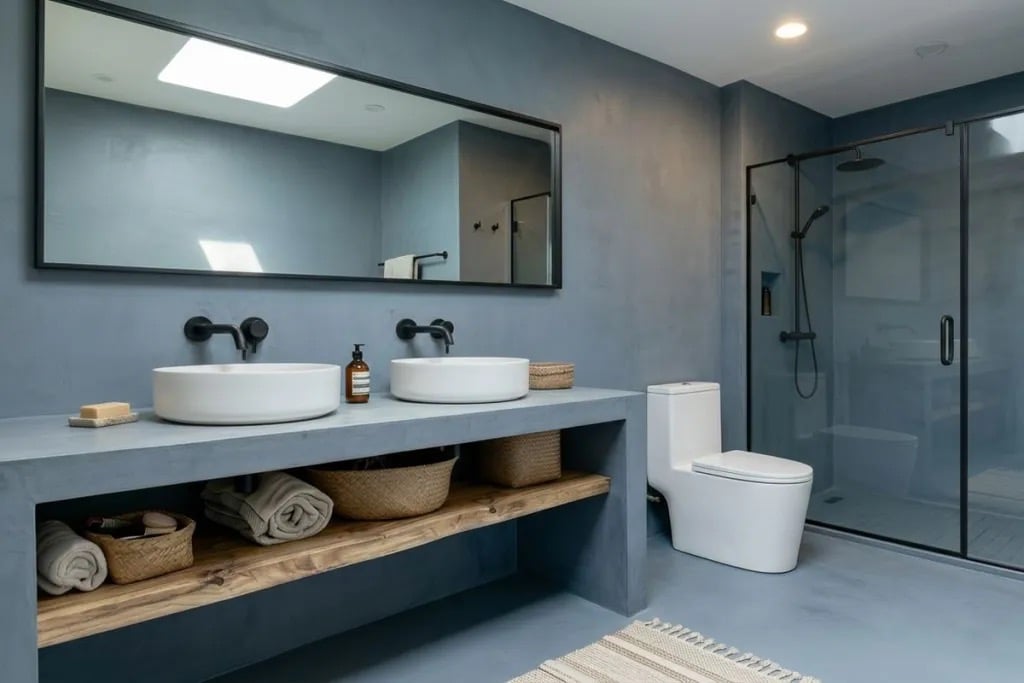
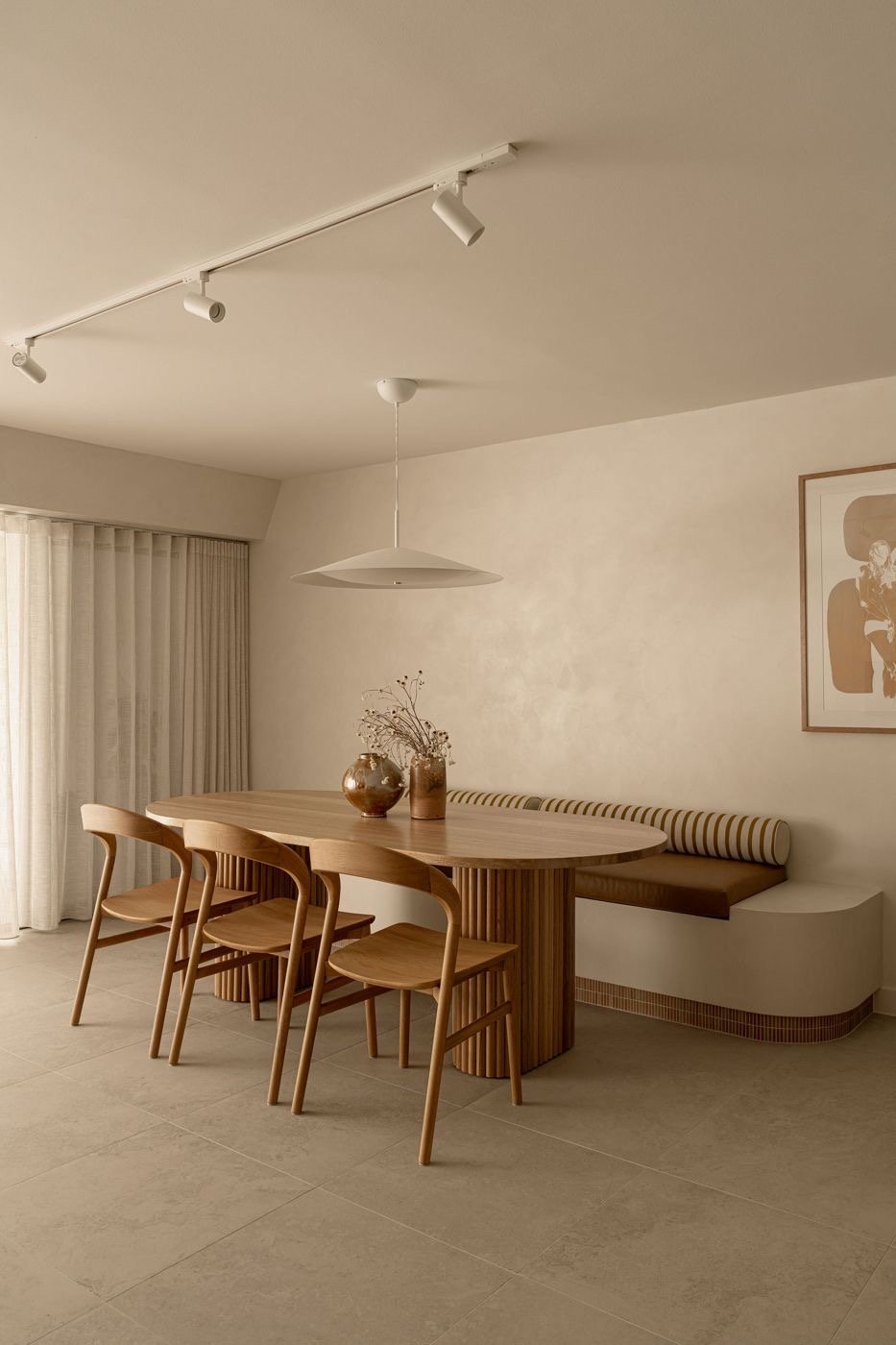
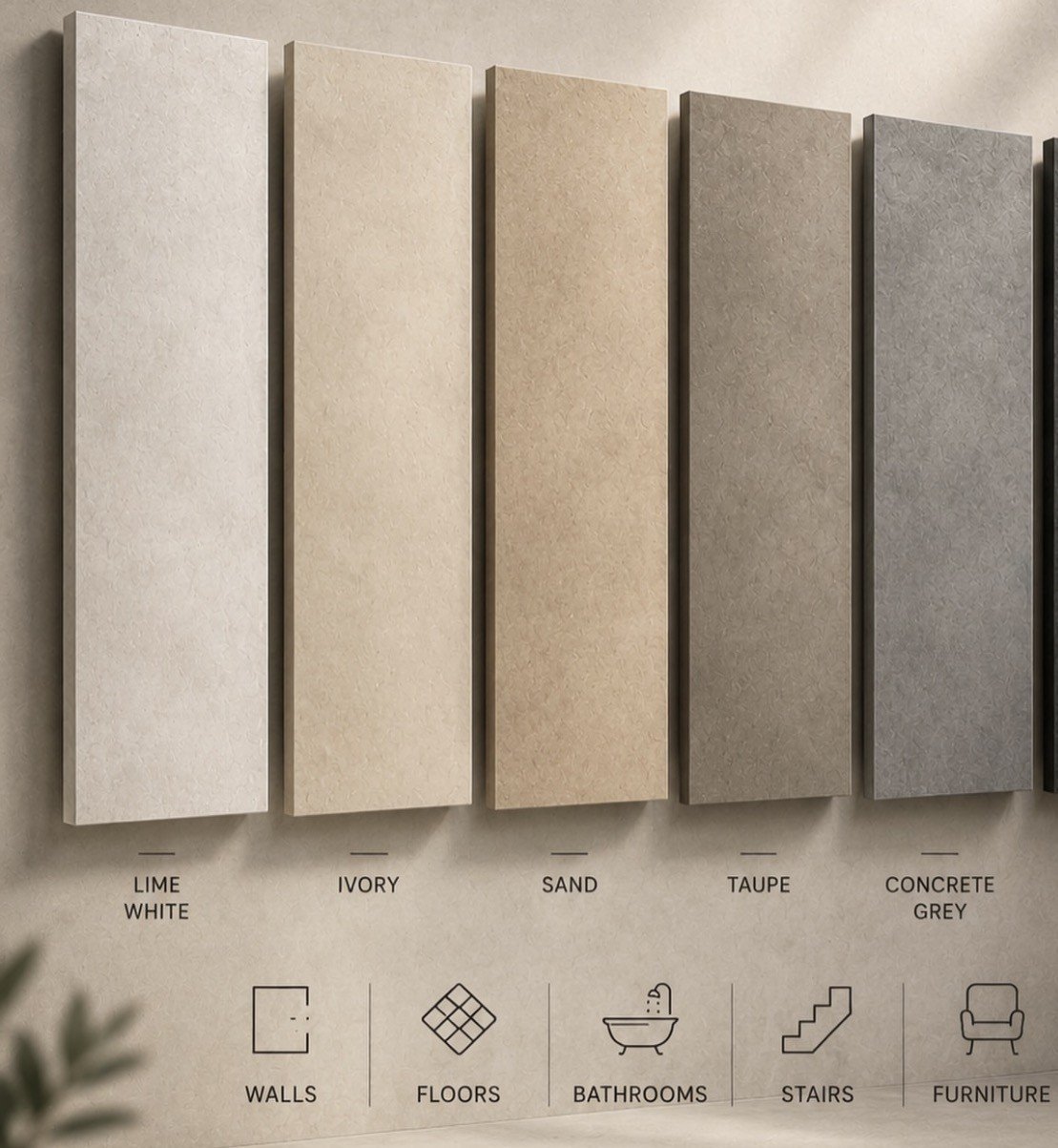
Microcement is tinted, so the color can be matched to a designer’s palette or to the other finishes in the home. Most Orange County projects land in quiet, natural tones.
Typical directions include:
Sheen is usually matte or satin. A glossier sealer is possible, but most interiors look better with a softer finish. On floors and in showers, texture and sealer are chosen with grip in mind, not just appearance.
The same color can read differently on a wall, on a floor, and inside a shower, so we recommend approving the look on a sample in your own light before the full installation.
No grout lines, and the same finish can travel from floor to wall to shower.
The system is only a few millimeters thick, so it often goes over existing tile or a prepared substrate without a major demolition.
The finish can follow a designer’s palette instead of a standard tile grid.
There are no grout joints to scrub. Everyday care is a soft cloth or mop and a pH-neutral cleaner.
It reads as a natural, hand-finished surface, not a plastic coating.
It is not automatically the right choice for every room. Tile is still a strong option when you want a proven modular surface that can be repaired tile by tile. Epoxy remains our go-to for many garages, because it is built for hot tires, oil, and shop use. Polished concrete is the right conversation when you have a slab you want to grind and finish, not a coating applied on top. We can help you compare those options at your estimate.
A quick look at how microcement differs from the other finishes we are asked about most.
| Finish | What it is | Joints | Added thickness | Over existing tile | Walls & showers | Look |
|---|---|---|---|---|---|---|
| Microcement | Thin hand-troweled cement coating with a sealer. | No joints. | About 2–3 mm added. | Often possible over sound, well-bonded tile. | Yes for walls and showers when built as a full wet-area system. | Mineral, custom color, subtle trowel movement. |
| Tile | Individual tiles in mortar with grout. | Grout lines throughout. | Thickness is tile plus setting bed. | Usually needs tear-out. | Yes for walls and showers. | Wide range of patterns with a visible grid. |
| Polished concrete | The existing slab, ground and polished. | No joints. | No thickness added. | Cannot go over tile; slab must be exposed. | Not typical for walls or showers. | Seamless concrete, limited to the slab. |
| Epoxy | A resin coating system. | No joints. | A thin film or a few millimeters. | Usually needs a prepared, suitable substrate. | Better for garages and utility spaces than guest bathrooms. | High-gloss or flake; reads as a coating. |
Every microcement project is a multi-day installation. The coats have to dry before the next one goes on, and the sealer needs time to cure. A typical room is several days on site, not a one-day coating.
We look at the substrate, moisture, movement, and how the room is used. For a shower, we plan the waterproofing, drains, and details before any finish work starts.
The surface is cleaned, repaired, and primed. Unstable tile, active cracks, or moisture issues are dealt with first. If the surface is not a good candidate, we will say so.
Two base coats build the body of the system. Fiberglass mesh is embedded where the surface needs it, which is common on floors and in wet areas.
Two thin finish coats create the color and texture. This is the hand work you will see and feel.
After the finish coats have cured, a primer or pre-sealer and protective sealer coats lock in the surface, help resist stains, and — in wet areas — work together with the membrane underneath.
Light foot traffic is usually possible a couple of days after sealing. The surface continues to harden over the following weeks. We will give you clear care instructions and tell you when the room can return to normal use, including when a shower can see regular water.
For showers, we wait until the sealer has had its recommended cure before the surface is used with water. That waiting period is part of doing the job correctly.
Day-to-day care is simple when the right sealer is in place.
Clean with a soft cloth or mop and a pH-neutral cleaner.
Avoid bleach, ammonia, vinegar, descalers, abrasive pads, and harsh detergents. Those can wear down the sealer.
Wipe up spills and standing water. Do not leave wet mats, towels, or leaking planters sitting on the floor.
Lift furniture instead of dragging it, and use felt pads under legs.
In the first two weeks after installation, treat the surface gently. It is walkable with care after sealing, but it has not reached full hardness yet.
The sealer is the wear layer. In higher-traffic areas and showers, it may need to be refreshed over time. How often depends on use. We will include care guidance when the project is handed over.
Cozy Coatings offers a 5-year workmanship warranty on microcement installations. It covers defects in our application, such as peeling or loss of bond caused by the installation itself.
It does not cover damage from misuse, impact, scratches, harsh cleaners, skipped maintenance, or movement or moisture problems in the building or substrate. Normal wear of the sealer, and the periodic reseal that a used surface may need, are maintenance — not a warranty claim.
The material manufacturer may offer a separate product warranty, depending on the system used. That coverage, if it applies, is in addition to our workmanship warranty and follows the manufacturer’s terms.
Yes, microcement can be used in showers and bathrooms when it is built as a complete wet-area system. The finish itself is not the waterproofing. A proper waterproofing membrane goes underneath, the surface is reinforced where needed, and a sealer suited to wet use is applied on top. We also follow the cure time before the shower is used with water. If a shower bid does not include waterproofing, it is not a complete bid.
Often, yes — if the tile is stable, well bonded, and properly prepared. That can mean less demolition and less mess. Hollow, loose, or uneven tile is not a good base. We make that call after seeing the surface, not as a promise in advance.
Limewash is a thin mineral wash used on walls for a soft, cloudy color. It is not a shower or floor finish. Microcement is a thicker, sealed cement system that can be used on floors, walls, and — with the right waterproofing — in wet areas.
A correctly specified system on a sound, well-prepared surface is not expected to crack on its own. When cracks appear, they usually come from movement in the wall or floor underneath, or from rushed prep. Microcement cannot hide a structural or substrate problem. We review that risk before recommending it.
Plan on several days on site, often in the range of three to seven days, depending on the size of the area, whether it is a floor or a wall, and whether it is a wet zone. Each coat needs drying time. After the last sealer, the surface still cures for weeks. We will give you a realistic schedule, including when you can walk on it and when a shower can be used.
Use a pH-neutral cleaner and a soft cloth or mop. Avoid harsh or acidic products. The sealer can be refreshed later in high-use areas. You will get care instructions at handover.
Most clients choose lime white, ivory, sand, taupe, or concrete grey, and custom tints are available to follow a designer’s palette. We recommend approving a sample in your own light, because the same color can look different on a floor, a wall, and in a shower.
Yes. We offer a 5-year workmanship warranty on our microcement installations, covering defects in application. It does not cover substrate movement, misuse, or normal sealer wear. Details are confirmed in your estimate and at handover.
Cozy Coatings is based in Huntington Beach and installs microcement throughout Orange County, including Huntington Beach, Newport Beach, Costa Mesa, Irvine, Fountain Valley, Westminster, Seal Beach, Laguna Beach, Laguna Niguel, Dana Point, Corona del Mar, Mission Viejo, Tustin, Anaheim, and surrounding communities.
See our full list of service areas.
If you are already looking at our metallic epoxy floors or garage floor coatings, microcement is a different finish — one we recommend when you want a seamless mineral surface in a living space, bathroom, or shower rather than a garage coating.